Global Media: United States
By: Tori Boorstein, Amanda Hartstein, Dane Gordon, and Dana Papandreadis
Vogue
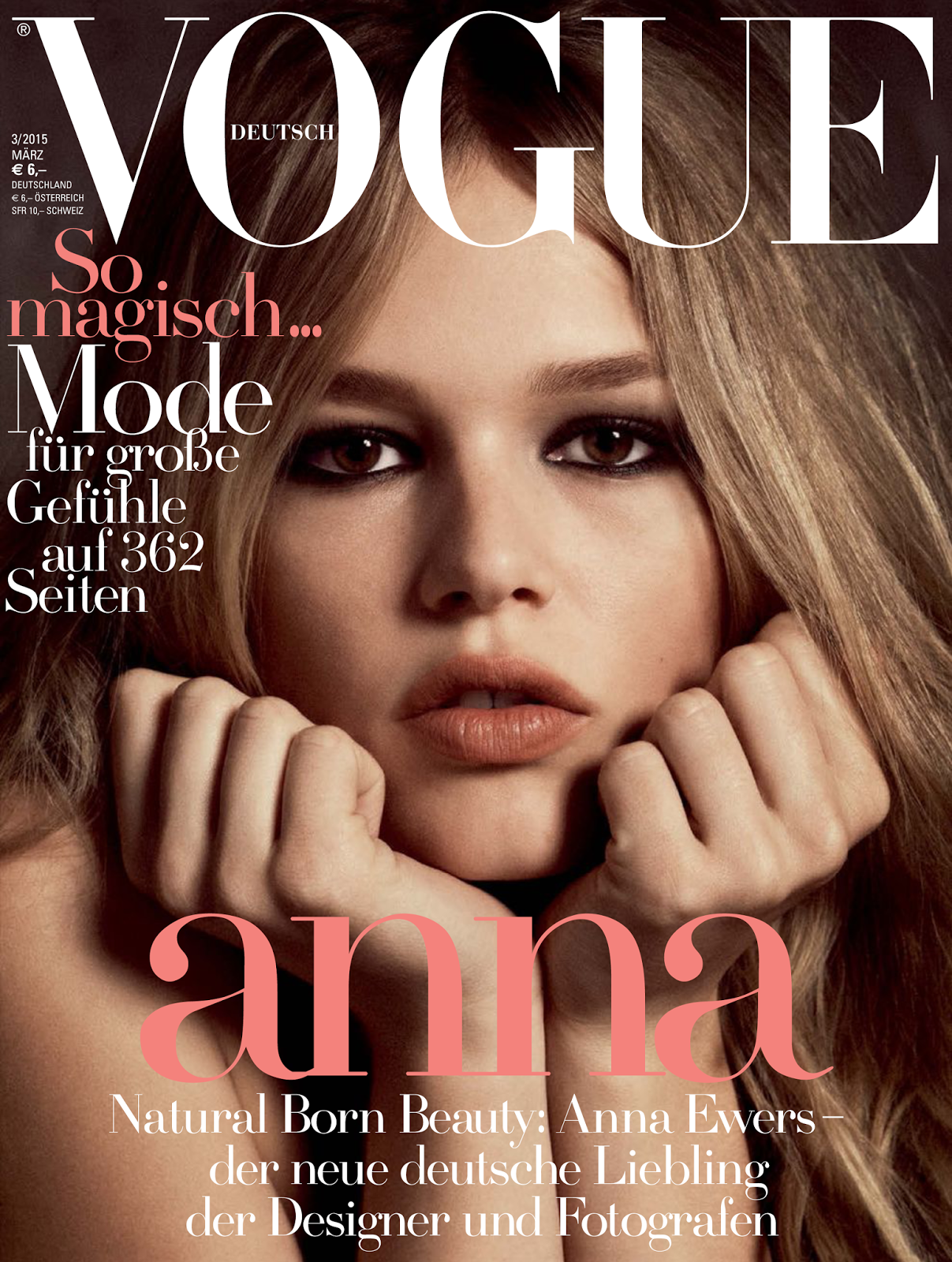
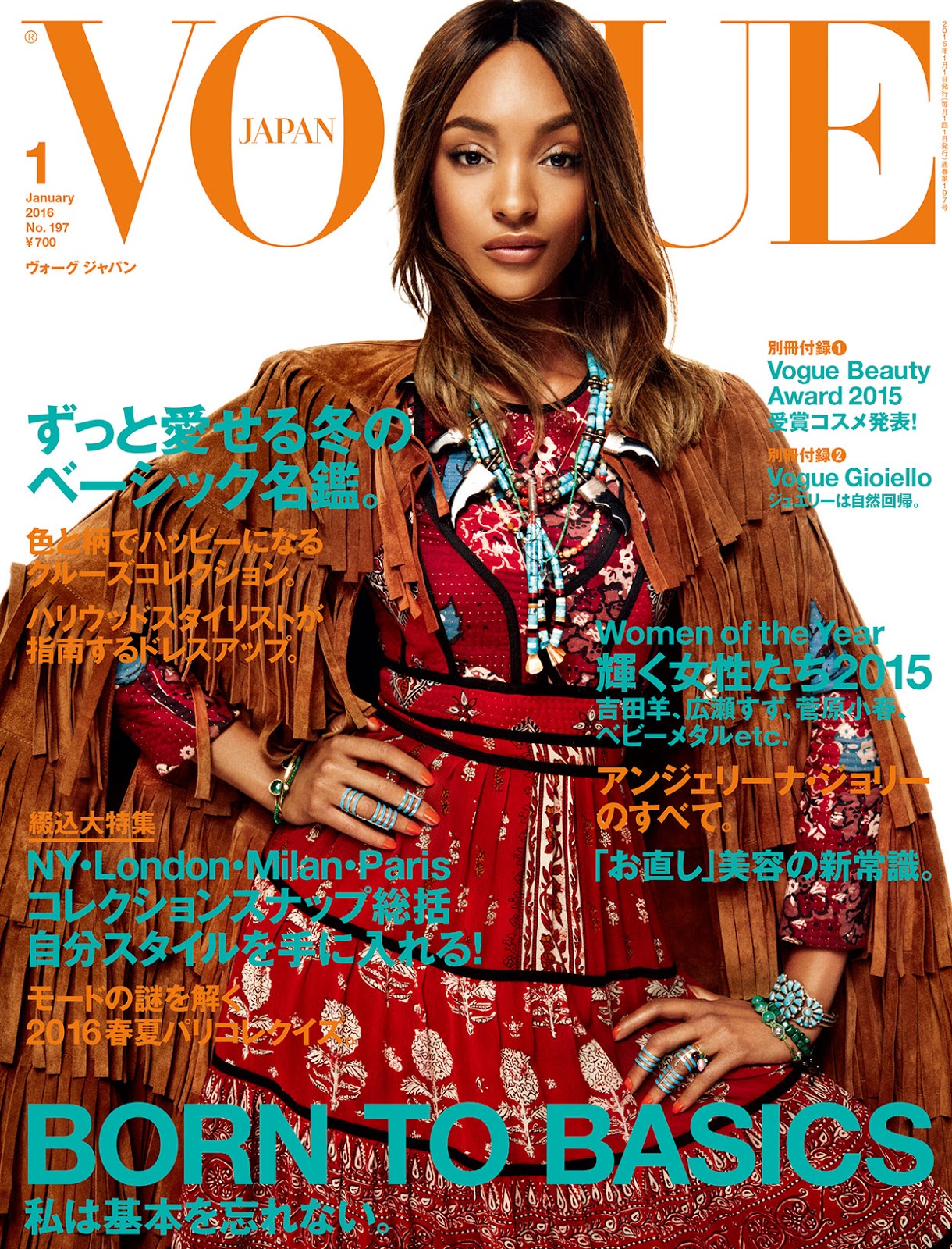
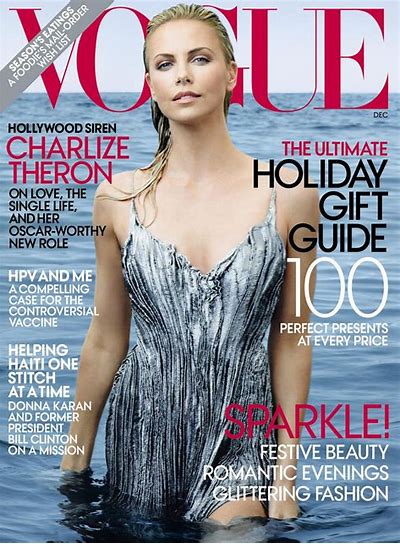
Vogue is an American fashion and lifestyle magazine created in 1892. Prolific in its readership, for over a century Vogue has been the world’s leading source in terms of what trends are “in” and what is “out” according to their beauty standards and ideals. According to the University of New Hampshire’s scholar, Ann Marie Britton, “This beauty…industry…holds the power to shape and change women’s perception of beauty,” (pg. 4).
In class, we discussed media portrayals of women succumbing to or challenging these beauty standards. We looked into the example of Betty La Fea, which was widely received by a large audience and adapted globally because the theme of struggling to define female beauty standards continues to be prevalent in most cultures. Vogue, however, continues to push conventional beauty (as seen above), and this imagery has blown wide open into a universal market.
Since being first published in America, Vogue now has over 17 countries creating their own spin off of the original vogue. Each of these portrays themes, styles, and cultural differences of their own respective country, while maintaining the classic beauty of the original Vogue. This, introduces two key points discussed in class: cultural imperialism and cultural hybridity. From its inception, Vogue has always been incredibly popular. These American ideals of beauty have now been thrusted into multiple countries. As seen on each cover, the background aesthetic may fit each country’s culture, but the model’s appearance is conventional western beauty. However, there is a cultural hybridity within the magazine industry because from this American Vogue, various different types from various countries were able to spawn from it.
The transnational reach from this magazine is immense. Not to mention that it has been run by the British editor, Anna Wintour, since 1988.
By: Tori Boorstein
An American Family: The First Ever Reality Show
Reality television, today, is a form of media often taken for granted. Easy to binge watch or play as background noise, it seems as though there is a different version of this format on every channel. However, reality television tells a story about the America’s media industry, from its history to how it has had the ability to transmit itself worldwide.
Los Angeles is America’s great Media Capital. According to class notes, a Media Capital is a center of media activity with its own logics of finance, production, and distribution. Throughout the world, people are familiar with a little part of Los Angeles known as Hollywood.
Hollywood has not only created its own brand, but it has revolutionized the cinema/television industry as the world knows it.

Aside from its financial successes, Hollywood was also the epicenter of creativity. Hollywood is often credited with the creation of many original Global Television Formats, or a programming idea that is global and then adopted locally. In the Waisbord reading, he mentions, “…the global dissemination of for-mats may suggest not only the global integration of the economy of the industry but also the standardization of content,” (pg. 360), suggesting a universal use of financial and creative methods when it comes to creating television.
In 1973, PBS aired what is now known as the first reality television show, An American Family. This show followed the Loud family in an upper middle class area within California. Throughout the 300 hours of filming, the show confronted many taboo subjects such as gender roles within the home, sexuality, and divorce.
https://www.youtube.com/watch?v=0U942OZ2104–> This link provides rare footage of An American Family, and how intimate conversations were recorded with the purpose for national broadcast.
From this show, an explosion of formats were created that invited the public eye into people’s private spaces. And because the reality television show format is so globally popular, it does show how profound American culture can be on the culture of the world. This acts as yet another example of American Cultural Imperialism
By: Tori Boorstein
TV Formats: The Real Housewives of….
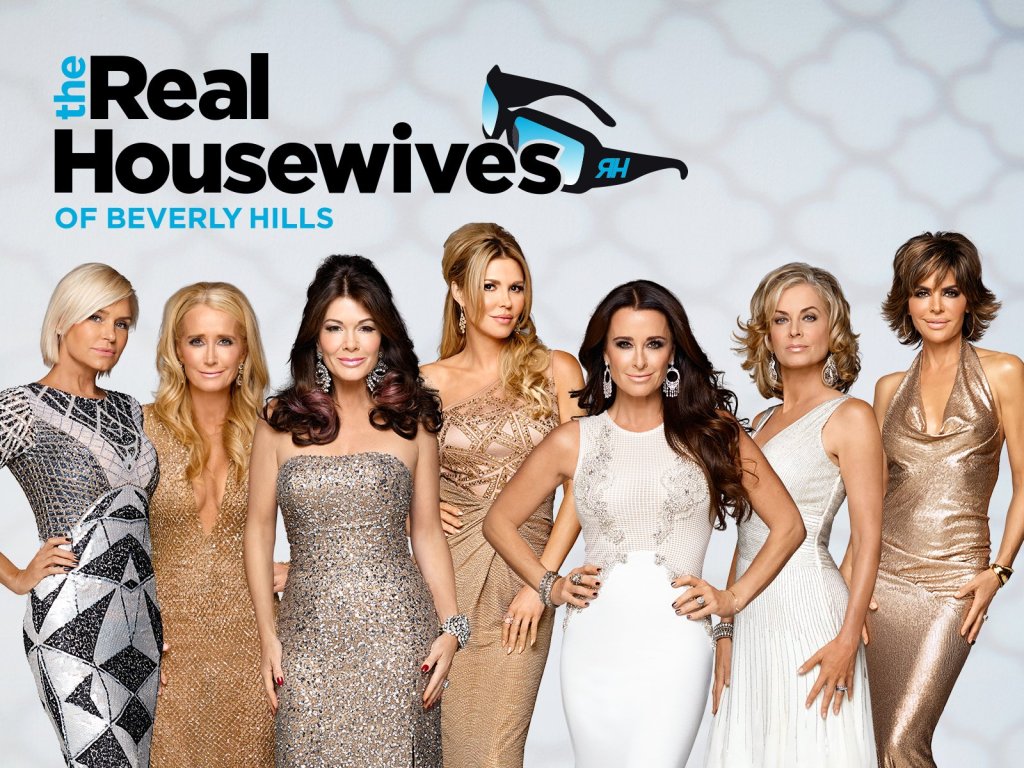
The Real Housewives franchise, a popular reality television series, combines cultural and geographical elements to form a global television format. The series chronicles the lives of well-off elitist women, from drama with friends and family to lavish vacations and shopping sprees. The first installation in the series was The Real Housewives of Orange County in 2006, beginning with five women in the wealthy Southern California community. Since 2006, eight other American Real Housewives franchises have debuted: New York City, Atlanta, New Jersey, Washington D.C., Beverly Hills, Miami, Potomac, Dallas, and (newly announced) Salt Lake City. The popularity of the franchises lead to the creation of International versions on international television channels, all while using the same structure of the American franchises. The Real Housewives of Athens debuted in 2011, with other installments following in Vancouver, Melbourne, Cheshire, Auckland, Sydney, Toronto, Hungary, Johannesburg, and (newly announced) Bangkok. Television, as discussed in Waisbord’s reading on TV formats will always remain tied to local and national cultures (2004). In its essence, a TV format is a global programming idea that can then be adopted locally in a particular national context. TV formats are generally looked at as broader entity, like reality television, and the Real Housewives franchises fall perfectly into the reality television category. The Real Housewife reality television format is able to succeed nationally and internationally because it is considered low risk for producers, as it has already proven to be successful in several regions. An important facet of each of the series’ franchises is that they are culturally specific but nationally neutral. The women that are picked to participate in each franchise represent the culture and values of the specific location.
Further, the franchise can be looked at as an example of glocalization which in relation to television formats would represent the adaptation of programming formulas to the tastes of local audiences. The Real Housewives have a very specific programming formula, especially for the opening sequences of each episode. Each begins with a montage of each woman’s tagline for that season, accompanied by glamorous music and video sequences. The taglines have become an essential part of every Housewife franchise and a common conversation topic among each franchise’s audience. Whether the viewer is watching an American version or an International one, they would be able to instantly recognize that the series is part of the Real Housewife franchise.
I chose the Real Housewife media franchise as my example of global TV formats and glocalization because it seamlessly intersects a global format with local audiences, even audiences outside of the United States as well. Culture and geography come together to assemble an authentic yet glamorous representation of many locations, all over the world …and the affluent women that live there.
By: Amanda Hartstein


The Real Housewives of Atlanta: https://youtu.be/vaB5bmii0Kk
The Real Housewives of Johannesburg: https://youtu.be/S1jsac0DtbE
#MeToo: How an American Movement went global
The #MeToo movement was initially founded on American social media network MySpace in 2006 by sexual harassment survivor Tarana Burke. Burke’s original goal of sharing her #MeToo message was to empower women who had survived sexual misconduct, harassment, and abuse by giving them an outlet to share their stories and receive support for their traumatic experiences. Eleven years later, #MeToo went viral. When sexual abuse allegations against prominent Hollywood producer Harvey Weinstein broke out in the news, the #MeToo trend began to resurface on Twitter. High profile female celebrities from all different industries began to use the hashtag, share their stories, and continuously repost #MeToo themed messages. What started as an America-based movement in 2006, suddenly went viral with allegations against some of the country’s most high profile men; even further than going viral in America, the movement went global.
#MeToo perfectly embodies the concept of transnationalism, in the context of a cultural and historical movement. Transnationalism can best be understood as the extension of social, political, and economic processes beyond jurisdictional borders of nations. After picking up so much traction in American news and on social media, #MeToo began to spread to many other nations and many other languages. What began as a platform for women to share their stories of sexual abuse became a platform for women everywhere in the world to speak out not only about sexual abuse they were facing, but all other discrimination and unequal treatment as well. Harvey Weinstein was the first abuser named in the wake of the movement and certainly not the last. Many other powerful men, in America and all over the globe, were named to have engaged in some form of sexual misconduct. #MeToo demonstrates the principles of the transnational social movement theory, a term written about in a journal article by R. Vaugn (2019). This “scale shift from national level activism to a social movement of global reach” is a key component of #MeToo.
In the video below, American reporter John Iadarola from The Damage Report speaks with Time’s Senior Reporter Suyin Haynes from Hong Kong on how #MeToo has gone global. Haynes explains that in Asian countries, the #MeToo movement reflects the original American ideals but has also taken on “different forms around Asia.” She mentions women in Thailand speaking out against “slut-shaming” and women in Japan using the movement as a place to speak about discrimination in the workplace. Regardless of country, Haynes mention that the #MeToo movement has become a “vehicle” for women all over the world to speak out.
I chose the American created #MeToo movement as an example of transnationalism because it has turned into a movement that has transcended drawn borders. Girls and women all over the world have taken solace in the movement and have supported each other through hardships, regardless of what time zone they are in, skin color they posses, or language they speak.
By: Amanda Hartstein

https://youtu.be/-tvqZZVFDPk?t=27
*End video at 1:58*
Media Hybridity: Urban Hip-Hop and Latin Trap
The term hybridity is defined as, “the ways in which forms become separated from existing practices and recombined with new forms and new practices.” Hybridity allows for a global flow of mass media to be synthesized and used in local cultures. “Spanglish” is one form of hybridity, it takes the Spanish language and incorporates English, which forms a combination of the two languages. Specifically, in the media, it is clear that “Spanglish” has become increasingly popular in American music. According to Rolling Stone, between 2016 and 2017 the number of “Spanish language entries on the Hot 100 jumped from a mere four to 19.” Furthermore, these Spanish entries can be labeled as “urban” hip-hop or Latin trap. The Urban genre is a combination of reggaeton, a Puerto Rican style of music which originated in the 1990’s, and trap, which originated in the south of the United States in the early 2000’s.
Urban hip-hop embodies the idea of cultural hybridity. Both genres of music are still extremely popular and work separate from one another. However, when combined they incorporate components from each culture to create a hybrid element. For example, in 2018 the song “I Like it” was released on Harlem native, Cardi B’s album “Invasion of Privacy,” which featured Puerto Rican Artist Bad Bunny and Colombian Artist J Balvin. The song uses typical trap beats and lyrics while incorporating salsa elements and Spanish lyrics as well. Furthermore, the songs popularity was immense, it has been streamed over 960 million times on Spotify alone, was nominated for the American Grammy award, record of the year, and won several other awards in 2019. According to the article “The Times Have Changed: What ‘I Like It’ Hitting Number 1 Means to Latin Music” the recent surge of “Spanish-infused songs,” has broadened the scope for Latin music globally. I chose Urban and Latin Trap as an example of hybridity because it recombines American music elements with Latin themes to create a new practice.
By Dane Gordon
Media Hybridity: Grime Music
Grime music is a popular form of British hip-hop which developed in London in the early 2000’s. The grime genre uses different UK styles such as, garage, jungle and deep house, while incorporating classic American hip-hop and rap elements. In a similar fashion to American rap, Grime often uses lyrics which revolve around “gritty depictions of urban life.” Similarly, to the Londoner, MIA, grime artists are not only use American music themes, they also are extremely popular in the united states and are often signed to American music record labels. For example, Lady Sovereign, a female grime artist who is most famous for her hit song “Love me or Hate me,” which debuted in 2006, signed to Rockefeller Records, and American record label started by Jay-Z. However, similarly to the way that grime incorporates American hip-hop into British trap, American artists are starting to use grime elements in an increasingly manner in American discography. Specifically, the Canadian-American artists, Drake, gave “a global platform to British artists.” On his album More Life, British grime artist Giggs, was featured on two songs. Drake also rapped over grime beats on the album and even used a British accent in many of his songs that did not feature an artist from the UK.
Drake was able to pave a path for grime music to travel to America and infiltrate classic American rap and hip-hop. Grime artists such as Skepta, Stormzy, and Tinie tempeh are just a few UK artists who have a massive American fan base and incorporate both American artists and themes in their music. Grime can be seen as a form of media hybridity as it borrows themes from American rap and hip hop, while also creating new musical elements that are being used in in American music today. This hybrid genre blurs the lines between American and British music, and “without realizing, you could be listening to multiple genres at once.”

The Walt Disney Company

The Walt Disney Company defines itself as “an American diversified multinational mass media and entertainment conglomerate”. The Disney corporation diversifies itself in multiple branches of business including media networks, amusement parks and attractions, studio entertainment, and most recently, direct-to-consumer streaming. Due to its massive reach and global impact, The Walt Disney Company is a prime example of American cultural and media imperialism.
In lecture, we discussed Disney as a company that transcends time and place, and shapes American childhoods. Disney has an extensive impact on the lives of thousands of children. As it spread internationally Disney Channel has established itself as a trusted source for children’s shows and TV formats. The company has transcended borders and grown into India, Latin America, the Middle East, and many more international locations. Countries outside of the US have adapted Disney original series to have local characters and dialogue while retaining the central themes and narratives of the show. For example, Disney Channel India has adapted its own version of “Jessie” a Disney Channel series about a young woman from a small town who moves to a big city and becomes a nanny. In India, the series it titled “Oye Jassie” and follows the exact same storyline. By adapting TV formats internationally, Disney has become the dominating media force in each country it reaches.
As the brand continues to grow, Disney has played a major role in the Americanization of other countries. The expansion of Disney series, characters, and films into other countries contributes to the company’s transnationalism while simultaneously imposing American culture upon the new countries. As a media conglomerate, Disney continues to purchase other media companies and has become one of the most powerful media forces in the world. By owning channels such as ABC, ESPN, Lifetime, and companies like Marvel Entertainment, and Pixar, Disney is a massive source of global media and the epitome of media imperialism.
By: Dana Papandreadis
“A Fistful of Dollars”: Spaghetti Westerns & Their Impact on American Cinema
Western movies came into popularity in the early 1930s. By the 60’s, the action-packed films were still thriving in American theaters and spreading globally. The term “Spaghetti Western” was coined by Americans film critics to describe a subgenre of western films that were produced and directed by Italians. Many of these films were created by or in collaboration with other European countries such as Spain and Germany. The genre itself its believed to have grown in popularity after the enormous success of Sergio Leone’s “A Fistful of Dollars” (1964).
Spaghetti Westerns embody the power of representation. Non-American producers chose their own narrative based on a perceived stereotypes about the ideologies of the American west. Spaghetti Westerns became a determiner of reality for their viewers. American western culture was represented as something that was more dramatic and violent than it truly was. Any foreigner who came across these films was accessing a reality that was not raw, or authentically American. However, the intensification of these films is mainly responsible for their popularity nationally and across the globe. Film critics still debate Italian influence on the contra-flow films and whether they are considered authentically American. In my opinion, though they portray an authentically American time period, the films themselves are a European interpretation of this era.
The term “Spaghetti Western” was originally considered depreciative due to critics feeling as though the Italian-made films were inferior to American-made Westerns. Though they were partially correct, due to the false portrayal of the West, the films were far from inferior. They were known for their overdramatized and violent scenes which can be seen in the trailer. Dialogue in the movies was sparse; directors used unique soundtracks to transition through the scenes. Enticing plots combined with complex protagonists contributed to the well-regarded reputation of these films.
By: Dana Papandreadis
Citations
Britton, A. (2012). “The Beauty Industry’s Influence on Women in Society” Honors Theses and Capstones.
Disney – Leadership, History, Corporate Social Responsibility. (n.d.). Retrieved from https://www.thewaltdisneycompany.com/about/.Max, M. (2019, April 24).
Every Company Disney Owns: A Map of Disney’s Worldwide Assets. Retrieved from https://www.titlemax.com/discovery-center/money-finance/companies-disney-owns-worldwide/.
Source: https://www.spaghetti-western.net/index.php/Introduction
Waisbord, S. (2004). McTV: Understanding the Global Popularity of Television Formats. Television & New Media: Vol. 5 No. 4
Vaugn, R. (2019). Global campaigns for girls’ and women’s education, 2000–2017: insights from transnational social movement theory, Comparative Education, 55:4, 494-516, DOI: 10.1080/03050068.2019.1657701
Barron, Lee. “The Sound of Street Corner Society: UK Grime Music as Ethnography.” Sage Journals, 2016, journals.sagepub.com/doi/full/10.1177/1367549413491937?casa_token=EMHN8rcfeSkAAAAA%3AtUOvtkF6dUCZarWSMIOX-ux6Hau_jfgBLECT9Lcouv3nwi6ZkbS7rLTd411d1NSl53qQT5rqlfL3#articleCitationDownloadContainer.
 Comm 306: Final Presentation